
Tornado Alley: What It Is, Where It Got Its Name, and Why It’s Shifting
Tornado Alley: What It Is, Where It Got Its Name, and Why It’s Shifting
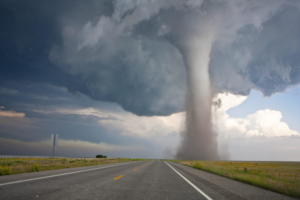
Every spring, a stretch of the central United States braces for what most of the country only sees on the news: large, violent tornadoes capable of leveling entire neighborhoods in minutes. This region — known as Tornado Alley — produces more tornadoes than anywhere else on Earth, and for good reason. The geography and atmospheric conditions there are uniquely suited to generating the kind of storms that spawn them.
But Tornado Alley isn’t a fixed line on a map. Its boundaries are debated, its activity is seasonal, and recent data suggests that tornado patterns across the U.S. are shifting in ways that matter for communities, emergency managers, and anyone working in disaster response.
Here’s what you need to know.
What Is Tornado Alley?
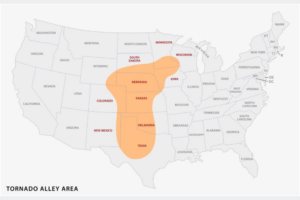
Tornado Alley is an informal term for the region of the central United States that experiences the highest concentration of tornado activity in the world. It has no official meteorological boundaries — different researchers draw the lines differently — but the core states are consistently the same: Texas, Oklahoma, Kansas, Nebraska, South Dakota, and Iowa. Colorado, Missouri, and Arkansas are often included depending on the data source and time period.
What makes this region distinct isn’t just frequency. It’s the intensity. Tornado Alley produces a disproportionate share of the most powerful tornadoes — EF4s and EF5s — because of the specific atmospheric conditions that develop there each spring.
Why Tornadoes Form Here: The Science
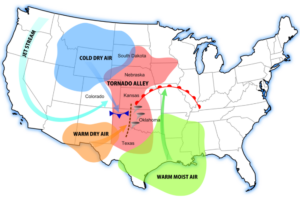
The reason Tornado Alley exists comes down to geography and three colliding air masses that have nowhere else to go.
Warm, moist air flows north from the Gulf of Mexico, loaded with the humidity that fuels thunderstorm development. Cold, dry air pushes south from Canada and rolls east off the Rocky Mountains. Hot, dry air from the desert Southwest rides in at lower altitudes. When these three systems converge over the flat expanse of the Great Plains, the atmosphere becomes violently unstable.
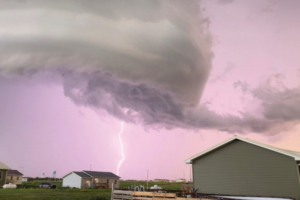
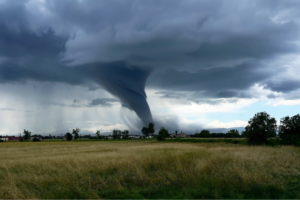
The flat terrain is a critical factor. Unlike the eastern U.S. or the West Coast, the Great Plains offers no mountains or significant elevation changes to disrupt or slow these air masses. They collide freely, creating the supercell thunderstorms — large, rotating storm systems — that are the primary source of significant tornadoes.
It’s a setup that repeats itself dozens of times each spring, which is why tornado season in this region is so predictable in its timing, even when individual storms are not.
Where Did the Name Come From?
The term “Tornado Alley” was coined in 1952 by two U.S. Air Force meteorologists — Major Ernest J. Fawbush and Captain Robert C. Miller — while analyzing tornado patterns across the central U.S. It was a descriptive shorthand for the region with the highest tornado density, and it stuck.
It was never an official designation from NOAA or any federal agency. But the name traveled fast through meteorological research, media coverage, and public awareness — and today it’s the most widely recognized geographic term in American severe weather.
The informal nature of the name is also why its boundaries are still debated. Ask ten meteorologists where Tornado Alley starts and ends and you’ll get ten slightly different answers.
When Tornado Season Peaks
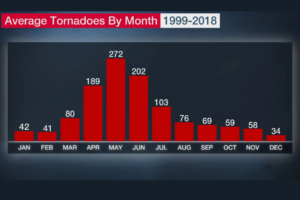
Tornado activity in Tornado Alley peaks in spring and early summer, with May being the single most active month by a wide margin. Based on historical data from 1999–2018, May averages around 272 tornadoes nationally — more than double April’s average of 189 and significantly above June’s 202.
Activity drops sharply through summer and reaches its lowest point in December and January, though tornadoes can and do form in any month when the atmospheric conditions are right.
For emergency managers, disaster housing providers, and relief contractors, this seasonal pattern matters. It creates a predictable deployment window — typically March through June — when the demand for emergency response resources spikes across Tornado Alley states.
Is Tornado Alley Shifting?
This is where the science gets more interesting — and more consequential.
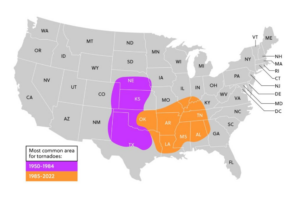
Research over the past two decades shows that the most active tornado zone is shifting eastward. The traditional Tornado Alley core (Texas, Oklahoma, Kansas, Nebraska) still sees significant activity, but states like Mississippi, Alabama, Tennessee, Kentucky, and Arkansas are now experiencing tornado frequency and intensity that rivals or exceeds the historical hotspot.
This eastern region is sometimes called “Dixie Alley,” and in some ways it presents a more dangerous threat than classic Tornado Alley. Tornadoes in the Southeast often occur at night, when fewer people are awake and alert to warnings. The terrain is hillier and more forested, which reduces visibility and makes spotting an approaching storm harder. Population density is higher in many of these areas, and the housing stock — more mobile homes and older structures — is more vulnerable to tornado damage.
The reasons for the shift are still being studied, but changing climate patterns, urban heat island effects, and improvements in storm detection that have revealed previously undercounted events in the Southeast all likely play a role.
Why This Matters Beyond the Weather
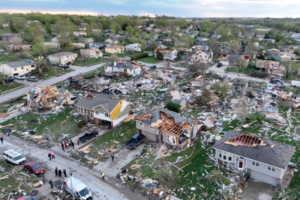
For communities in the path of these storms, tornado season means more than severe weather alerts. A significant tornado event can displace hundreds or thousands of residents overnight — destroying homes, disrupting power and water, and creating an immediate need for temporary housing that can last weeks or months.
FEMA activations, insurance ALE (Additional Living Expenses) claims, and utility restoration deployments all follow tornado events. The personnel responding to those events — adjusters, contractors, FEMA responders, utility crews — need housing close to the affected areas, often on short notice.
As tornado activity expands into new regions, the infrastructure for that response needs to expand with it. Communities in Dixie Alley that weren’t historically part of the emergency response supply chain are now seeing the same kinds of large-scale activations that Texas and Oklahoma have managed for decades.
Advances in Forecasting Have Saved Lives
One of the real success stories in tornado preparedness over the past 30 years is how dramatically warning times have improved. Doppler radar systems, storm spotter networks, and advances in numerical weather modeling now give many communities 10–15 minutes of warning before a tornado arrives — sometimes more.
That might not sound like much, but in tornado response terms, it’s significant. Early warning systems have demonstrably reduced fatalities even as tornado frequency has remained high. The challenge now is extending that reach into areas where warning infrastructure is less developed, and ensuring that warnings translate into action in communities that haven’t historically lived with this level of tornado risk.
Tornado Alley Isn’t Going Anywhere
Despite the eastward shift in activity, the traditional Tornado Alley states aren’t seeing tornado risk disappear — they’re seeing it redistribute. The Great Plains will continue to produce dangerous storms as long as Gulf moisture, Canadian cold fronts, and desert dry lines keep colliding over flat terrain. That’s a physics problem, not a policy one.
What’s changing is the map of who needs to be prepared. Emergency managers, housing providers, and disaster response organizations operating only in the traditional Tornado Alley footprint are increasingly behind the curve. The storm doesn’t care where the historical hotspot used to be.
About Corporate Quarters USA
When tornadoes strike, the need for emergency housing moves fast. Corporate Quarters USA has supported disaster response deployments — FEMA activations, utility restoration crews, insurance adjusters, and displaced families — since 2001. We’re GSA certified, woman-owned, and built for the kind of fast-turnaround, flexible-term housing that disaster response requires.
Check availability or call 866-633-6169 ext. 1.