
Hurricanes vs. Cyclones: Why Do We Call Them Different Names?
Hurricanes vs. Cyclones: Why Do We Call Them Different Names?
Every year, powerful tropical storms make headlines around the world. Sometimes they’re called hurricanes, other times they’re referred to as cyclones or typhoons. If they’re all the same type of storm, why do they have different names?
The answer is surprisingly simple: it’s mainly about location. When comparing hurricanes vs. cyclones, the regional name changes, while the underlying weather system belongs to the same family.
One Storm, Three Names
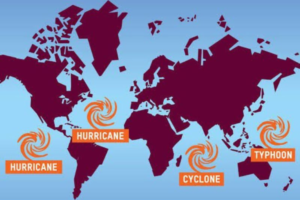
Hurricanes and typhoons are regional names for strong tropical cyclones. These rotating storm systems form over warm tropical oceans and draw energy from warm, moist air.
The name depends on where the storm occurs, and regional classification systems also differ.
- Hurricanes occur in the North Atlantic, including the Caribbean Sea and Gulf of Mexico, and the eastern and central North Pacific.
- Typhoons occur in the northwestern Pacific, affecting places such as Japan, the Philippines, Taiwan, and China.
- Tropical cyclones, often shortened to cyclones, occur in the Indian Ocean and South Pacific, affecting regions including Australia, India, Bangladesh, Madagascar, and parts of eastern Africa.
These regional terms help communicate which part of the world a storm is affecting. NOAA explains the difference between hurricanes, typhoons, and cyclones.
Why “Hurricane”?

The word hurricane has roots in the Caribbean. It came into English through the Spanish huracán, from a Taíno term associated with powerful storms. Accounts of its history also connect the name with Caribbean storm-deity traditions.
Today, the name is used for intense tropical cyclones in the Atlantic and eastern and central North Pacific. Read more about the history of these storm names from NOAA.
Where Did “Cyclone” Come From?
The word cyclone draws on Greek roots related to circular motion, including kyklos, meaning circle or wheel. The name refers to a storm’s rotating winds.
In the 1800s, British storm researcher Henry Piddington introduced the term while studying storms in the Indian Ocean. Today, “tropical cyclone” remains the general scientific term for this family of storms as well as a regional name used in the Indian Ocean and South Pacific.
The Science Is the Same
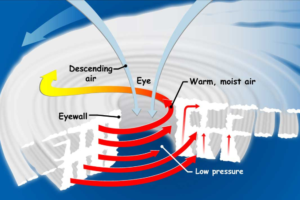
Whether a strong tropical cyclone is called a hurricane, cyclone, or typhoon, conditions that generally favor its development include:
- Warm ocean water, typically around 80°F (26.5°C) or warmer, extending below the surface
- Moist air and organized thunderstorms
- Low vertical wind shear, allowing the storm to organize
- Sufficient distance from the equator for the Coriolis effect, associated with Earth’s rotation, to help establish rotation
In the Atlantic and eastern and central North Pacific, a storm becomes a hurricane when maximum sustained winds reach 74 mph (119 km/h). Typhoons have a comparable threshold, but wind-averaging methods and intensity classifications vary between agencies.
“Cyclone” does not have a universal 74 mph threshold. For example, Australia’s Category 1 tropical cyclones have mean winds of 63–88 km/h. Always use the local weather agency’s classifications and warnings. See the Australian Bureau of Meteorology’s cyclone guide and NOAA’s explanation of hurricane formation.
Why Naming Matters
Using different regional names is more than tradition—it helps meteorologists, emergency managers, and the public identify where a storm is occurring.
- Hurricane points to the Atlantic or eastern or central North Pacific.
- Typhoon points to the northwestern Pacific.
- Cyclone, in tropical-weather reporting, commonly points to the Indian Ocean or South Pacific.
This regional terminology supports forecasting, emergency preparedness, and international communication. However, the name or wind category alone does not describe every hazard: heavy rain, flooding, and storm surge can also be dangerous.
The Bottom Line
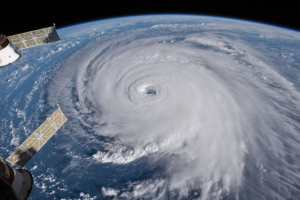
Despite their different regional names, hurricanes, typhoons, and tropical cyclones belong to the same family of rotating tropical storms. Location explains the naming difference, while local agencies determine the classification.
No matter what they’re called, these storms deserve respect. Understanding their terminology—and the science behind them—helps communities stay informed and better prepared when severe weather strikes.
The next time you hear about a hurricane in Florida, a typhoon in Japan, or a cyclone near Australia, you’ll know they’re part of the same family of storms, with different names depending on where they occur.
For more on how CQUSA supports travelers on disaster-response assignments, read the story behind FEMA Flexible.